

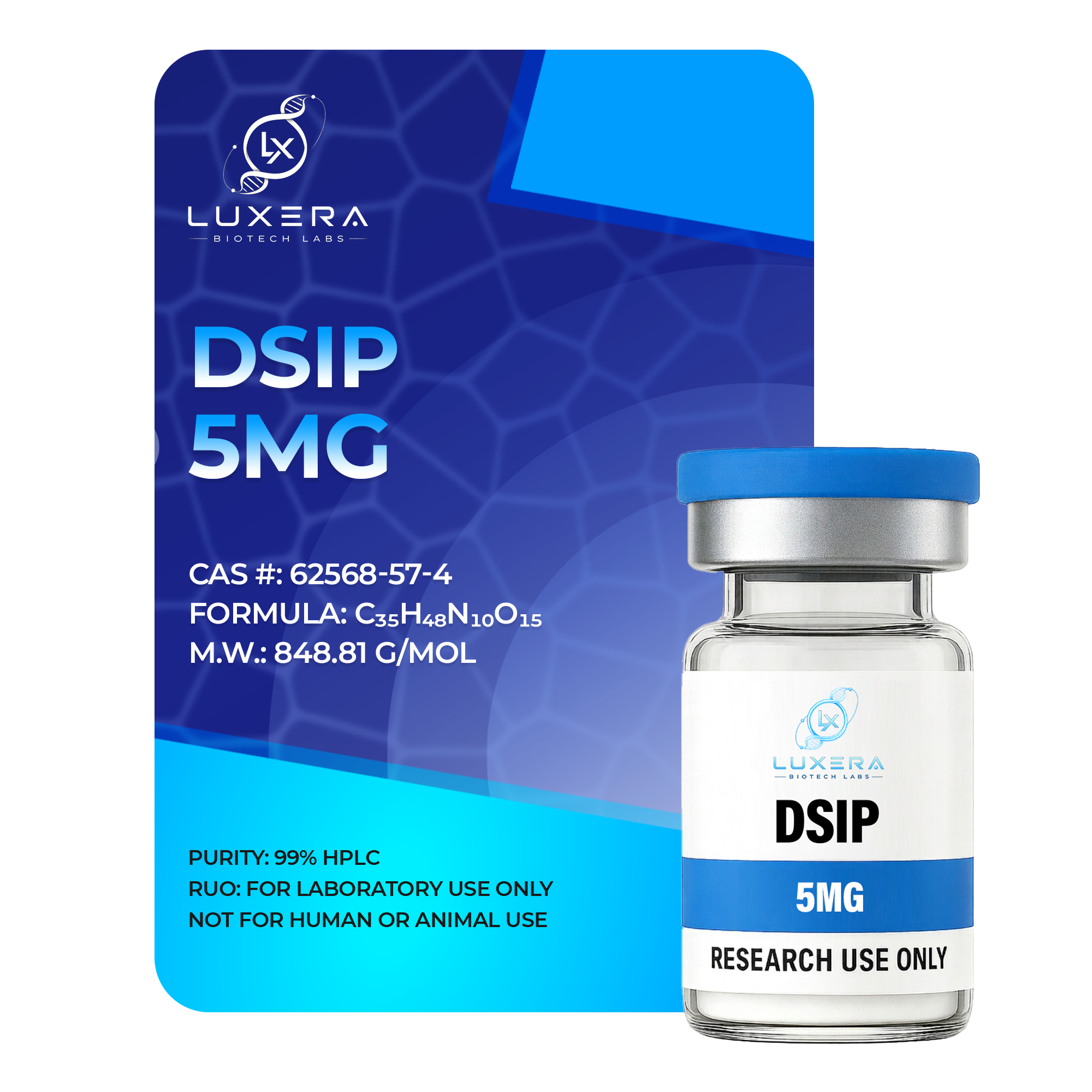
DSIP
$49.00
DSIP is a naturally occurring neuropeptide identified in mammalian brain tissue, studied for its role in sleep regulation, stress modulation, and endocrine balance. Investigational research explores its potential in circadian rhythm stabilization, neuroprotection, and therapeutic applications for sleep disorders.
What Is DSIP?
Delta Sleep‑Inducing Peptide (DSIP) is a naturally occurring neuropeptide first isolated from rabbit brain tissue. It has been studied for its potential role in regulating sleep architecture, particularly the initiation and maintenance of slow‑wave (delta) sleep. DSIP is classified as an endogenous peptide with diverse neuroendocrine and physiological effects, though its precise mechanisms remain incompletely defined.
Mechanism of Action
DSIP is believed to interact with multiple central nervous system pathways, including modulation of GABAergic and serotonergic signaling. It may influence hypothalamic and pituitary activity, contributing to regulation of stress hormones such as corticotropin and cortisol. DSIP has also been associated with stabilization of circadian rhythms, reduction of stress‑induced hyperarousal, and potential neuroprotective effects. Its activity appears pleiotropic, with evidence suggesting roles in pain modulation, thermoregulation, and endocrine balance.
Research & Clinical Data
Although DSIP has been investigated for decades, clinical data remain limited and inconclusive. Preclinical studies suggest benefits in sleep induction, stress reduction, and neuroprotection. Some small human trials have explored DSIP analogs for insomnia, anxiety, and withdrawal syndromes, but regulatory approval has not been established. Ongoing research continues to evaluate its therapeutic potential in sleep medicine and neuropsychiatric disorders.
Purity & Quality
Reference‑grade peptide material. Certificate of Analysis available per batch. Regulatory status: investigational, not FDA‑ or EMA‑approved.
Classification & Handling Class: Endogenous neuropeptide | Source: Mammalian brain tissue | Administration: Investigational, parenteral routes in studies | Storage: 2–8°C refrigerated, protect from light | Regulatory: Not FDA/EMA approved
| Dose | 5mg |
|---|
Related products
-
All
NAD+
$89.00 Select options This product has multiple variants. The options may be chosen on the product page -
All
BPC-157
Price range: $49.00 through $69.00 Select options This product has multiple variants. The options may be chosen on the product page -
All
MOTS-C
$59.00 Select options This product has multiple variants. The options may be chosen on the product page -
All
Melanotan 2
$59.00 Select options This product has multiple variants. The options may be chosen on the product page
Reviews
There are no reviews yet.