
Epithalon
$49.00
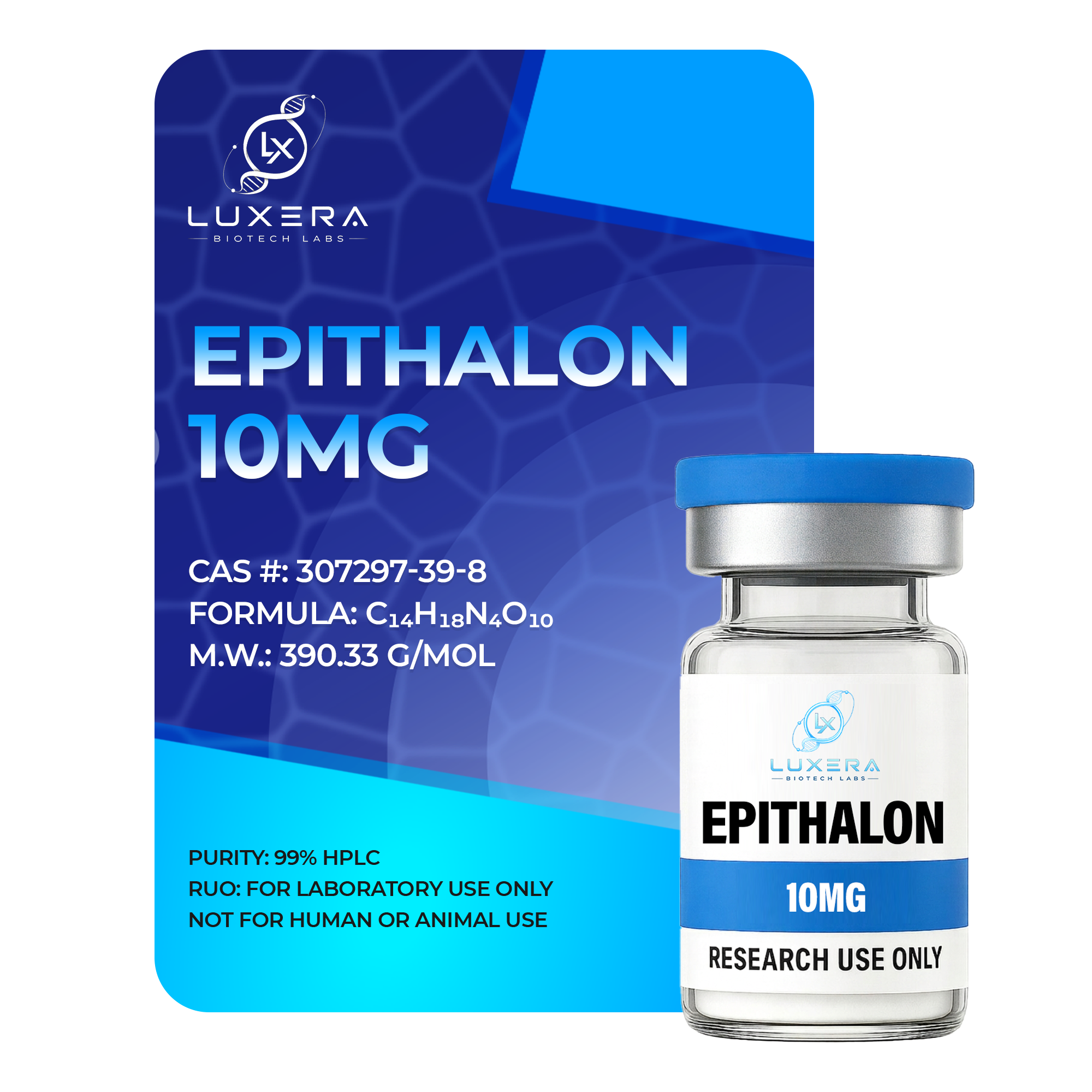
Epithalon (Epitalon) is a synthetic tetrapeptide derived from natural epithalamin, studied for its role in telomerase activation, cellular longevity, and circadian rhythm regulation. Investigational research explores anti‑aging, neuroprotective, and endocrine‑modulating properties in preclinical and limited clinical contexts.
What Is Epithalon (Epitalon)?
Epithalon, also known as Epitalon, is a synthetic tetrapeptide (Ala‑Glu‑Asp‑Gly) developed as an analog of epithalamin, a naturally occurring peptide isolated from the pineal gland. It has been investigated for its potential to modulate aging processes, improve circadian rhythm regulation, and support cellular longevity.
Mechanism of Action
Epithalon is reported to activate telomerase, the enzyme responsible for elongating telomeres at the ends of chromosomes. By promoting telomere extension, Epithalon may counteract replicative senescence and enhance cellular lifespan. Additionally, it influences melatonin secretion and circadian rhythm stabilization, contributing to improved sleep regulation and endocrine balance. Preclinical studies suggest antioxidant activity, DNA repair facilitation, and modulation of stress response pathways, positioning Epithalon as a candidate for anti‑aging and neuroprotective research.
Research & Clinical Data
Epithalon has been studied in animal models and limited human trials, with reported benefits including improved sleep quality, enhanced immune function, and potential reduction in age‑related pathologies. Some clinical investigations in Russia and Eastern Europe have explored its role in gerontology and preventive medicine. However, regulatory approval in Western countries remains absent, and large‑scale randomized trials are lacking.
Purity & Quality
Reference‑grade peptide material. Certificate of Analysis available per batch. Regulatory status: investigational, not FDA‑ or EMA‑approved.
Classification & Handling Class: Synthetic tetrapeptide | Source: Analog of pineal peptide epithalamin | Administration: Investigational, parenteral routes in studies | Storage: 2–8°C refrigerated, protect from light | Regulatory: Not FDA/EMA approved
| Dose | 10mg |
|---|
Related products
-
All
NAD+
$89.00 Select options This product has multiple variants. The options may be chosen on the product page -
All
Kisspeptin-10
$79.00 Select options This product has multiple variants. The options may be chosen on the product page -
All
KLOW
$149.00 Select options This product has multiple variants. The options may be chosen on the product page -
All
Botulinum Toxin
$199.00 Select options This product has multiple variants. The options may be chosen on the product page
Reviews
There are no reviews yet.