

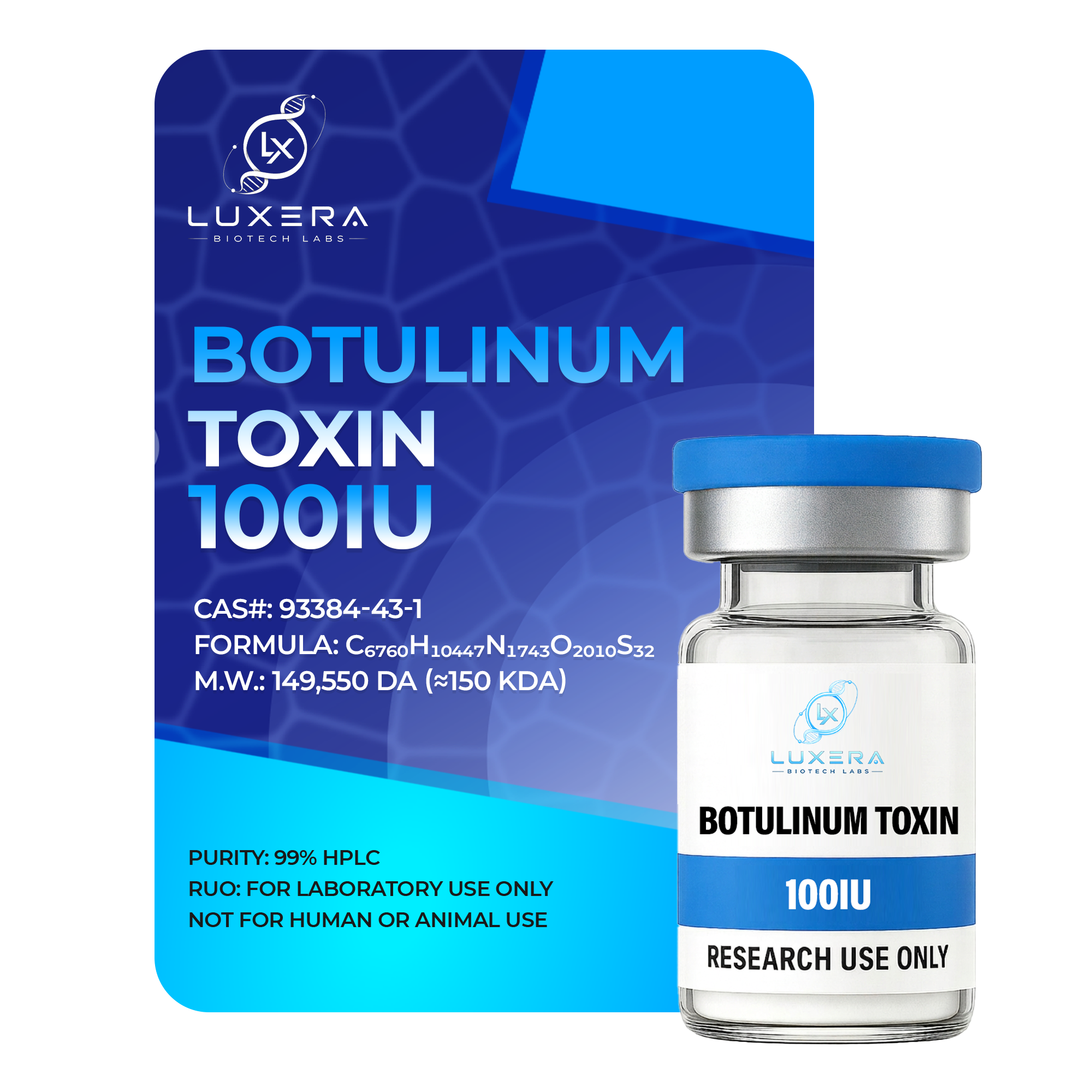
Botulinum Toxin
$199.00
Botulinum Toxin is a neurotoxic protein derived from Clostridium botulinum, widely studied for therapeutic and aesthetic applications. It acts by inhibiting acetylcholine release at neuromuscular junctions, producing localized muscle relaxation, with diverse clinical utility across neurology, dermatology, and cosmetic medicine.
What Is Botulinum Toxin?
Botulinum Toxin is a potent neurotoxic protein produced by Clostridium botulinum and related species. It is classified into multiple serotypes (A–G), with type A and type B most commonly utilized in clinical practice. Initially recognized for its paralytic effects, Botulinum Toxin has evolved into a cornerstone therapeutic agent in both neurology and aesthetic medicine.
Mechanism of Action
Botulinum Toxin exerts its effect by cleaving SNARE proteins within presynaptic cholinergic terminals, thereby blocking acetylcholine release at the neuromuscular junction. This inhibition prevents muscle contraction, resulting in temporary localized paralysis. The pharmacological action is highly targeted, with onset typically within days and duration lasting several months.
Research & Clinical Applications
Botulinum Toxin is FDA-approved for multiple indications, including cervical dystonia, blepharospasm, chronic migraine, spasticity, and hyperhidrosis. In aesthetic medicine, it is widely used for temporary reduction of facial wrinkles, particularly glabellar lines and crow’s feet. Ongoing clinical trials explore expanded applications such as depression, neuropathic pain, and gastrointestinal motility disorders.
Purity & Quality
Reference-grade formulations are manufactured under strict GMP conditions, with Certificates of Analysis available per batch. Regulatory status: FDA- and EMA-approved for specific therapeutic and aesthetic indications.
Classification & Handling Class: Neurotoxic protein | Source: Clostridium botulinum | Administration: Intramuscular or intradermal injection | Storage: 2–8°C refrigerated, protect from light | Regulatory: Approved for therapeutic and cosmetic use
| Dose | 100IU |
|---|
Related products
-
All
NAD+
$89.00 Select options This product has multiple variants. The options may be chosen on the product page -
All
Bacteriostatic Water
Price range: $13.00 through $18.00 Select options This product has multiple variants. The options may be chosen on the product page -
All
GHRP-2
$49.00 Select options This product has multiple variants. The options may be chosen on the product page -
All
GHK-Cu
$49.00 Select options This product has multiple variants. The options may be chosen on the product page
Reviews
There are no reviews yet.